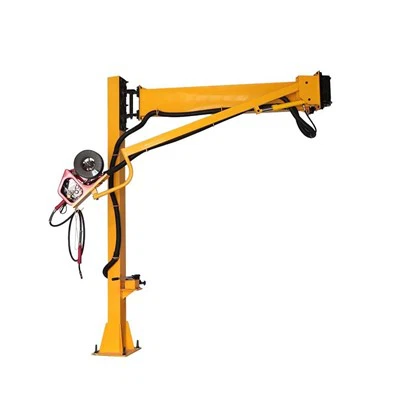
1. Ultra-High Positioning Accuracy Eliminates Defects at the Source
The core value of a wire feeder arm lies in its millimeter- to micron-level motion precision, effectively eliminating human visual errors and inconsistencies in manual operation.
Precise Trajectory Control
Servo-driven systems with closed-loop control achieve positioning accuracy within ±0.05 mm and repeatability up to ±0.01 mm.
This ensures consistent weld gaps and torch height throughout the process, significantly reducing common defects such as lack of fusion, undercut, and porosity. Weld inspection pass rates can improve from approximately 95% (manual welding) to over 99.9%.
Accurate Torch Orientation
Multi-axis coordinated motion enables precise adjustment of torch angles (e.g., ±5°–10° oscillation), making it suitable for circumferential and complex curved welds.
The torch can maintain optimal alignment with the weld seam, ensuring uniform weld pool formation.
Dynamic Error Compensation
Advanced systems equipped with arc tracking or 3D vision can detect seam deviations in real time and automatically compensate.
They can handle workpiece misalignment and thermal distortion of up to ±1.5 mm, ensuring stable and continuous weld paths.

2. Stable Process Parameters Ensure Batch Consistency
Manual welding is highly dependent on operator skill, fatigue, and variability, often leading to fluctuations in welding speed, current, and voltage. Wire feeder arm systems eliminate these inconsistencies through standardized control.
Consistent Process Parameters
Welding speed variation can be controlled within ±1%.
Integrated wire feeding systems synchronize wire feed speed with welding speed, preventing defects such as underfill or excessive reinforcement caused by feed delays.
Repeatable Batch Quality
Once parameters are set, they can be consistently replicated across batches and workstations.
Weld bead geometry-including width, reinforcement height, and penetration depth-remains uniform, addressing the common issue of inconsistent manual weld quality.
Adaptability to Complex Applications
For different materials and specifications (e.g., carbon steel, stainless steel, aluminum alloys), wire feeder arm systems can quickly switch between pre-programmed process parameters, reducing setup time while maintaining stability.

3. Optimized Working Environment Reduces External Interference
Welding quality is influenced not only by equipment but also by the working environment. Wire feeder arm systems improve overall conditions through better system integration and environmental control.
Organized Cable and Hose Management
Wire feeders, cables, and gas hoses are integrated along the arm, keeping them off the floor.
This eliminates cable dragging and entanglement, reducing the risk of signal interruptions or equipment collisions that could disrupt welding operations.
Effective Fume Extraction
Integrated flexible extraction arms can follow the welding point in real time, capturing fumes at the source.
This prevents contaminants from affecting the weld pool (reducing porosity and inclusions) while also improving air quality and operator visibility.
Improved Workspace Safety and Ergonomics
By removing floor clutter, more space is available for material handling, reducing the risk of accidental impacts.
The system also minimizes the need for awkward manual welding positions (e.g., overhead or confined spaces), lowering operator error rates and improving overall safety.