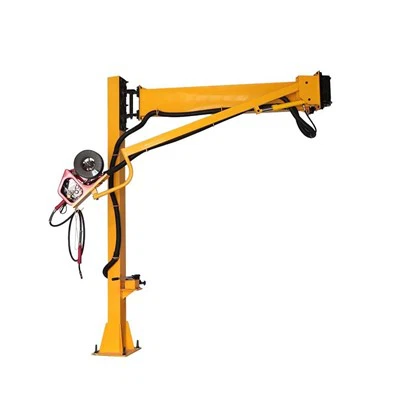
1. Structural Characteristics Firmly anchored at one end with the opposite end extending freely. All applied structural loads and resulting bending moments are concentrated entirely at the fixed support.
2. Load & Stress Design The stress concentrated at the fixed end increases proportionally with the length of the overhang. As the extension reach increases, the rated load capacity must be derated accordingly. Comprehensive anti-overturning (stability) calculations are mandatory.
3. Material Selection Standard carbon steel is utilized for general operating conditions. For outdoor exposure or fluid-transfer applications, galvanized or heavy-duty anti-corrosion coated piping is required. Seamless steel pipe is the primary standard for oil and fuel transfer Cantilevers.
https://www.weldingboom.com/cantilever/

4. Articulation & Movable Design Rotational and swivel joints must be equipped with heavy-duty bearings. Fueling Cantilevers must feature an adjustable pitch (elevation/depression) angle to easily accommodate varying vehicle heights and ensure operational flexibility.
5. Safety Engineering Mechanical travel stops and anti-breakaway safety fittings must be integrated into the design. Because the base and its associated welds are critical load-bearing zones, they require structural stiffening and reinforced welding.
6. Environmental Optimization Outdoor installations must explicitly account for dynamic wind loads and rain/moisture corrosion. Base plates and anchoring materials must be appropriately thickened to withstand these environmental stressors over time.