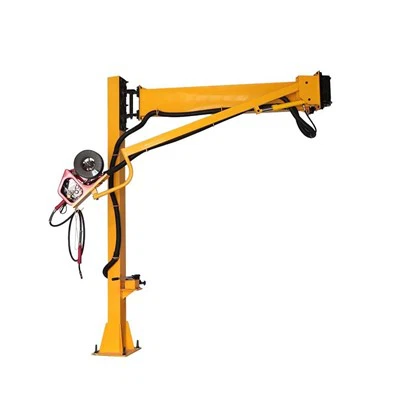
I. Structural & Installation Inspection
Integrity: Verify that the base, column, and articulated arms are securely welded or bolted; ensure there are no cold welds, cracks, or visible deformations.
Mounting Hardware: Confirm that mounting flanges and bolt holes align perfectly with the equipment. All bolts must be present, torqued to specification, and fitted with intact anti-loosening washers (e.g., split or Nord-Lock washers).
Rigidity: The assembly must exhibit sufficient structural rigidity with no significant wobbling, twisting, or sagging under maximum load conditions.
Pivot Precision: All shafts and articulated joints must meet machining tolerances, showing no burrs, binding, or excessive clearance (slop).
II. Counterbalance Performance (Critical Items)
Full-Load Balancing: The system must achieve balance across all angles while under a full operational load (including wire feeder, torch, cables, and a full wire spool).
Zero-Drift Hover: The arm must remain stationary at any position (low, horizontal, or high) upon release, with no self-sinking or self-rising.
Operation Effort: Vertical pitch movement must be light and consistent, providing a smooth tactile feel without sudden resistance changes or "dead spots."
Adjustment Range: The spring balancer or tension mechanism must provide sufficient adjustment travel, smooth operation, and reliable locking without recoil failure.
III. Kinematic Flexibility
Range of Motion: Pitching, slewing (rotation), and telescopic extension must be smooth throughout the entire range without abnormal noise, binding, or mechanical interference.
Damping Control: Rotational and joint friction dampers must be adjustable to prevent uncontrolled swinging or inertial drifting.
Workspace Coverage: Ensure the movement envelope meets workstation requirements without blind spots or interference with machine tools and fixtures.
Stowage: The arm should fold and stow smoothly with accurate limit stops to ensure clear aisle passage and organized shop-floor storage.
https://www.weldingboom.com/wire-feeder-arm/

IV. Cable & Hose Management
Routing: Wire conduits, power cables, and gas hoses must be secured with proper clips/brackets. Layout must be neat, avoiding sharp bends, pinching, or over-extension.
Dynamic Following: Cables must follow the arm movement synchronously with appropriate torsion relief to prevent wear or tension during long-term cycling.
Protection: Protective sleeving and anti-wear pads must be installed correctly, particularly at high-friction pivot points.
Connectors: All interfaces and fittings must be leak-proof and vibration-resistant, maintaining a professional and standardized appearance.
V. Load Bearing & Durability
Static Load Stability: No progressive sagging or spring fatigue during long-term suspension at rated capacity.
Cyclic Testing: Joints and fasteners must remain secure and show no loosening after a minimum of 50 full-motion cycles.
Structural Safety: The arm body must not exhibit permanent bending or joint deformation when subjected to the design load.
VI. Safety & Protection
Edge Safety: All moving parts must be free of sharp edges or burrs to prevent operator injury (scratches/cuts).
Travel Limits: Mechanical stops and rubber buffers must be present and functional to prevent impact or over-travel at extreme positions.
Mechanism Integrity: The counterbalance assembly must be free of damage, and springs must show no signs of micro-cracking, eliminating the risk of sudden failure or falling.
Environmental Resistance: Insulation and protective components must be intact and capable of withstanding weld spatter and high temperatures in a production environment.